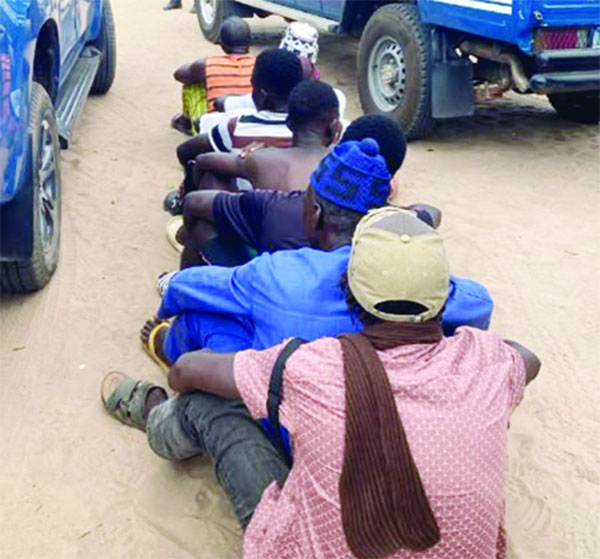
A joint operation carried out on Tuesday by the Army and the National Gendarmerie in the Lyndiane district of Colobane, in Ziguinchor, led to the arrest of 28 people at the headquarters of the political wing of the Mfdc. Equipment and documents were also seized during the operation, which took place on the anniversary of the assassination of Abdou Elinkine Diatta.
A joint operation carried out on Tuesday by the Army and the Gendarmerie in the Lyndiane district of Colobane, in Ziguinchor (South), led to the arrest of 28 people at Magoukouro, headquarters of the political wing of the Movement of Democratic Forces of Casamance (Mfdc), Aps learned from security sources. Telephones, documents and flags purportedly of Casamance were also seized during the operation, which passed off without major incident, they added.
Magoukouro was a gathering place for members of the irredentist movement, who meet there every year to hold prayers in memory of former Mfdc leaders now deceased, whose photographs adorned the walls. According to concurring sources, the site is also known for hosting meetings, gatherings and commemorative ceremonies for individuals claiming allegiance to the rebel movement. The joint Army and Gendarmerie operation took place on the seventh anniversary of the assassination, in 2019 in Mlomp, in the Bignona department, of Abdou Elinkine Diatta, self-proclaimed successor to the Mfdc leader, Father Augustin Diamacoune Senghor.
Casamance, separated from northern Senegal by The Gambia, has been the scene of one of the continent’s oldest conflicts since separatists took to the bush in December 1982. Having claimed thousands of victims and devastated the economy, the conflict has greatly decreased in intensity in recent years.
In May 1991 and July 1993, the Senegalese authorities and the Movement of Democratic Forces of Casamance (Mfdc) signed ceasefire agreements.
But negotiations stalled over the question of independence for this southern part of the country, demanded by the irredentist movement.
In 1993, by mutual agreement, the parties asked the French archivist Jacques Charpy to carry out historical research into the colonial past of Casamance. His report, published in November 1993, concluded that Casamance was “Senegalese”. These conclusions were rejected by the former Secretary General of the Mfdc, Father Diamacoune Senghor, in a counter-report made public in early 1995.
Comments (0)
Be the first to comment.
Sign in to comment